Antoine Morris
Dr. King’s Fair Housing Dream Deferred
While the housing market works through this difficult period, my Administration remains steadfast in its commitment to help responsible homeowners, to end discrimination, and to work to ensure that all citizens have access to housing. During National Fair Housing Month, we acknowledge our responsibility to ensure that all Americans enjoy the opportunities that this great land of liberty offers. -President George W. Bush April 1, 2008
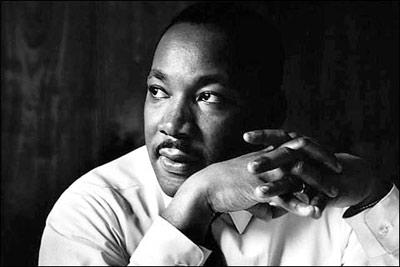
On January 26, 1966, Dr. Martin Luther King and his wife Coretta Scott King rented a decrepit apartment in the West Side of Chicago to spotlight the city’s deplorable segregated housing conditions. By calling for a commitment to “End the Slums” King keenly understood that education, jobs and other important services were contingent upon equal opportunity in the housing market.
But despite extracting modest commitments in August of that year from the Chicago Real Estate Board of more open housing laws in exchange for an end to the demonstrations, he fell well short of ending housing discrimination in the windy city. He did, however, outline in his agreement with the city a housing plan that spoke to racial integration and economic empowerment.
According to news reports at the time, Dr. King wanted to have 11 Chicago slum buildings converted into “poor people’s condominiums,” which would be partially financed by public aid and locally managed by tenant unions. Dr. King hoped, if the program was widely embraced, poverty-stricken families nationwide could have a shot at achieving the dream of homeownership and all the promise associated with it. With one in seven people living in poverty in 1967, King sought to make economic justice a core civil rights issue.
 |
Some of those ideas were later incorporated into the Poor People’s Campaign, Dr. King’s effort to construct a racially diverse coalition of the nation’s poor. But his efforts were short-lived.
Dr. King was assassinated in Memphis, Tennessee April 4, 1968.
After his death Congress moved swiftly to pass Fair Housing Act of 1968, which banned housing discrimination on the basis of race, national origin, color, religion, sex, and national origin. At the time it must have seem as if the King’s vision for fair housing and economic justice had new energy, but progress has been mixed ever since.
While its is true that homeownership has increased since across the board since 1968, stark disparities still do exist. In 2005, for example, the rate for homeownership for whites was 72 percent compared to 49 and 48 percent for Latinos and African Americans. Racial disparities in home values also exist. According to 2000 census data, the median home value for whites was $123,400, whereas it was $105,600 and $80,000 for Latinos and African Americans.
With homeownership being the cornerstone of household wealth, these gaps will surely become more pronounced with the continuation of undeterred housing discrimination. Consider the foreclosure crisis spurred by sub prime lending.
Recent federal data shows “54 percent of African-Americans and 47 percent of Hispanics received high cost mortgages in 2006 [while] only 18 percent of non-Hispanic whites received high cost mortgages,” despite the fact that many people color had the same credit profile as whites.
Subprime mortgages are higher coast loans that are supposed to be available to those with sub par credit histories. But a study of more than $2.5 trillion in subprime mortgage loans since 2000 found that by the end of 2006, 61 percent of the borrowers had scores high enough to qualify for loan products with far more favorable terms.
This past week, the U.S. Senate had a chance to offer a lifeline to many of these same borrowers. But instead it passed a watered down bipartisan bill that scrapped a key provision that would have allowed bankruptcy judges to reduce mortgage rates and the principal for homeowners overwhelmed by high interest rates.
Meanwhile, the same governmental body charged with holding unscrupulous mortgage lenders accountable, the Department of Housing and Urban Development, has also woefully under performed in meeting the housing needs of internally displaced persons in the wake Hurricane Katrina.
Former HUD Secretary Alphonso Jackson will undoubtedly come under heightened public scrutiny for his involvement in unfairly awarding government contracts, and deservedly so. But Jackson made other questionable decisions that merit close examination such as approving the diversion of $600 million dollars in housing funds to a port improvement project in Mississippi instead of providing affordable housing for those displaced by the storm. Since the storm the homeless population in New Orleans has doubled to 12,000 even as rent prices climb to $1,100 or more.
Under his leadership, Jackson also approved the spending of $762 million in demolition funds for public housing apartments costing in New Orleans, some of which was still intact, despite rebuilding only a third of the homes in its place.
All of which amounts to a far cry from not simply HUD’s mission of providing affordable housing and promoting economic development, but Dr. King’s too.
Antoine Morris: Author Bio | Other Posts
Posted at 2:30 PM, Apr 05, 2008 in
Cities | Civil Justice | Civil Rights | Democracy | Economic Opportunity | Housing | Hurricane Katrina | Middle-class squeeze | Racial Justice | Urban Affairs
Permalink | Email to Friend