Andrea Batista Schlesinger
Congestion pricing means looking ahead
Last week, a contractor visited my home to inspect my floors, which were improperly laid. Too many gaps. He said I had two options: wood filler to disguise the cracks, or relay the floor. The former is the easiest option. The latter would be a whole lot of mess for a moment. It was a tough call, but I decided that the momentary disruption was worth it for sound long-term infrastructure.
I’m glad David Weprin wasn’t my contractor.
At a press conference this weekend Councilman Weprin opposed congestion pricing and suggested alternatives such as:
“vigorous enforcement of existing traffic and parking rules, like cracking down on double and triple parked cars, preventing trucks from parking in loading zones once they have completed their deliveries, reducing non-emergency deliveries during the day and stopping taxis from middle of the street pick-ups and drop-offs.”
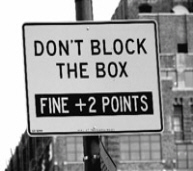 Do these people that say that if we just enforce the traffic laws we can reduce congestion understand that congestion pricing is as much about tomorrow as it is today? Clearly not. Do they really think we can don’t-block-the-box our way into a central business district that will work for an additional one million people? I know that they say it – at press conferences and the like – but do they actual mean it? I mean, I’ve heard everything now, from enforcing the box laws to ending alternate street parking. None of those things seem to get the point.
I got interested in congestion pricing for one simple reason. I sat at Mayor Bloomberg’s Earth Day speech last year, and I was moved by the notion – quaint as it is – that government’s job is to not just respond but to anticipate the needs of the communities and people it represents. Sadly, some do not share that vision of government. They would rather us not plan for the day, soon approaching, when the realities of climate change will meet the reality of the lives of New Yorkers – and the one million new New Yorkers who will be here. They would rather seem to be the populist heroes of today. And of course there’s a reason – because these folks won’t be in office when the chickens come home to roost.
New York City is, despite the contentions of David Weprin and his fellow dissenters, a place that likes to think long-term. We take the income tax surcharge when we know it will lead to more cops on the street. We’ll take the property tax hike when we know it will strengthen our city’s capacity to deliver critical services. We’ll even take the smoking ban. But there are always those who believe that the status quo is worth defending at all costs. They aren’t leaders. They are temperature-takers.
This congestion pricing plan isn’t perfect – I say that having served as a Commissioner. But it is a start for a conversation that we must have, and that hopefully the state legislature will have, despite having turned away almost $400 million in federal dollars. This debate is indeed about equity. But not the Brodsky definition. In fact, equity is not defined by everyone having access to behavior that has inherently inequitable impacts. This is about all of us living in a city that is functional and sustainable. (After all, when this city has one million more people, insufficient infrastructure, and poor air quality, just who has the choice to move? It won’t be the poor.) It is about responding to the real and pressing needs of urban centers threatened by climate change.
But to me, what this debate is ultimately about is what kind of government do we expect here in New York City? A government that looks ahead, or a government that looks to the will of their local democratic club? It is certainly more difficult to transform, as State Senator Eric Schneiderman puts it, than to transact, but isn’t that what we expect of those we entrust to serve?
Andrea Batista Schlesinger: Author Bio | Other Posts
Posted at 4:31 PM, Apr 07, 2008 in
Cities | Energy & Environment | New York | Transportation
Permalink | Email to Friend