Andrea Batista Schlesinger
DMI Sends Members of Congress Home with Their 2007 Grades!
If the middle class could give your Congressmember a grade, what would it be? Today, DMI releases grades for every senator and representative, evaluating their votes on key legislation that affects the current and aspiring middle class.
 2007 began as a year of great promise. Congress was flooded with dozens of new members, many elected with a pledge to address the middle-class squeeze and help more working people attain a middle-class standard of living. Important legislation—from expanding children’s health coverage to bringing down the cost of college loans—was introduced and brought to a vote. But, faced with Senate filibusters and a recalcitrant President, many bills died or were passed in watered-down form. Still, the bills that did become law represent concrete gains for current and aspiring middle-class Americans, including a higher minimum wage, expanded Pell Grants, a freeze on middle class tax hikes and lower costs to fuel cars.
TheMiddleClass.org 2007 Congressional Scorecard takes a closer look at the decisions made by Congress, from the one-year freeze to prevent the Alternative Minimum Tax from hitting middle-class families to the filibuster that originally torpedoed a minimum wage increase (later passed) and the trade bill that put the interests of multinational corporations and large investors before the concerns of middle-class Americans.
After examining 13 bills in detail, the 2007 Congressional Scorecard assigns a grade to each Member of Congress based on his or her support for the middle class. On the whole, Congress squeaked by with a passing grade in 2007, but there is considerable room for improvement. Just 62% of Representatives and 56% of Senators received a C or better. While this middle-class record is far better than the first term of the 109th Congress, the millions of Americans striving to attain—or hold onto—a middle-class standard of living deserve more from their elected representatives.
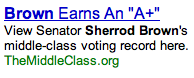
In an effort to hold Congress accountable to the middle class, DMI bought a Google ad for each and every member of Congress, which will show up on the right side of the screen. Each ad includes the legislator's letter grade and a link to their own personal page on TheMiddleClass.org.
But what can you do with this veritable treasure trove of information, you ask? The possibilities are endless. Create your own new-and-improved personal widget for your blog, and feature the names of your state's senators and representatives or issues of importance. Bloggers can use the grades when writing about any Congressmember and how they rank on middle class issues. Read about the best and worst bills of the year, and find out how Congress stacked up. Link to analysis of the bills on the scorecard on TheMiddleClass.org.
Congress, we're watching you, and so are millions of Google-searchers who see the Google ads. So check out the grades, link to them, Google them, and do your part to hold Congress accountable.
Andrea Batista Schlesinger: Author Bio | Other Posts
Posted at 6:44 AM, Mar 12, 2008 in
TheMiddleClass.org
Permalink | Email to Friend